One of the characteristics of the contemporary world is the sharp competition between the economies of the United States and China, that has been taking place for the last 30 years, and which is also expressed in the political, diplomatic field, but points to a direct military clash not only between these two countries and the blocs of allies of each one, but on the plane of a generalized war, a new world war. Many of the outbreaks of war underway today are a result of this.
Understanding the class character of this conflict is crucial for the workers and peoples, and of course for the international communist movement, which faces a set of difficulties arising from weaknesses, distortions, and theoretical confusions, especially on the question of imperialism.
And we are not thinking only of ideological positions alien to Marxism-Leninism and the communist movement, but of positions that emerged from it, that deform it, turn it into dogma, and promote political lines different from the interests of the working class and peoples, in a very dangerous and unacceptable way.
We are referring to the question of associating imperialism exclusively with the United States, from which other ideological problems and very serious errors of strategy derive. This has nothing to do at all with Lenin's development of Marxism based on the analysis of the transition from capitalism of free competition to capitalism of monopolies, where a new stage is founded for the whole capitalist mode of production, the phase of imperialism, with its characteristics, a phase not for a country or group of countries, but for the entire capitalist system. Imperialism for Marxism-Leninism is not the designation of new empires, a new classification of powerful nations, or the assignment of that role to any particular one, but to point out how capitalism in all countries changed into monopoly capitalism.
Capitalism has uneven development [1], but it is no longer based on free competition, since concentration and centralization have led to monopoly and this is a general feature that has been going on for more than a century, in which nothing remains static, there are constant movements. To make this clear, the Marxist-Leninist theory of imperialism does not seek to describe a geopolitical situation, with dominant centers and dependent oppressed peripheries, but to explain the highest and final stage of capitalism, of the capitalist mode of production as a whole.
A group of economists and theoreticians of the petty bourgeoisie have argued that the issue of imperialism is center/periphery, north/south, and they make dependence an unchangeable absolute value; this has filtered into some sectors of the communist movement that have gradually been replacing Marxism-Leninism and assuming unscientific positions, which is notable in their theoretical publications, their editorial policy, and the educational materials for their cadres, in their strategy, tactics, and political action. Instead of the analysis of each capitalist country within the imperialist system, of the constant movements where some improve their position to the detriment of others – which increases inter-imperialist antagonisms – they incessantly repeat the simplistic formulations of a super-powerful country, of an empire, thus moving away from the class criterion to superimpose the criterion of the national question and interclassism. And so, anti-imperialism understood as the struggle against contemporary capitalism, beginning with the struggle against capitalism in each country, is confined to anti-Americanism.
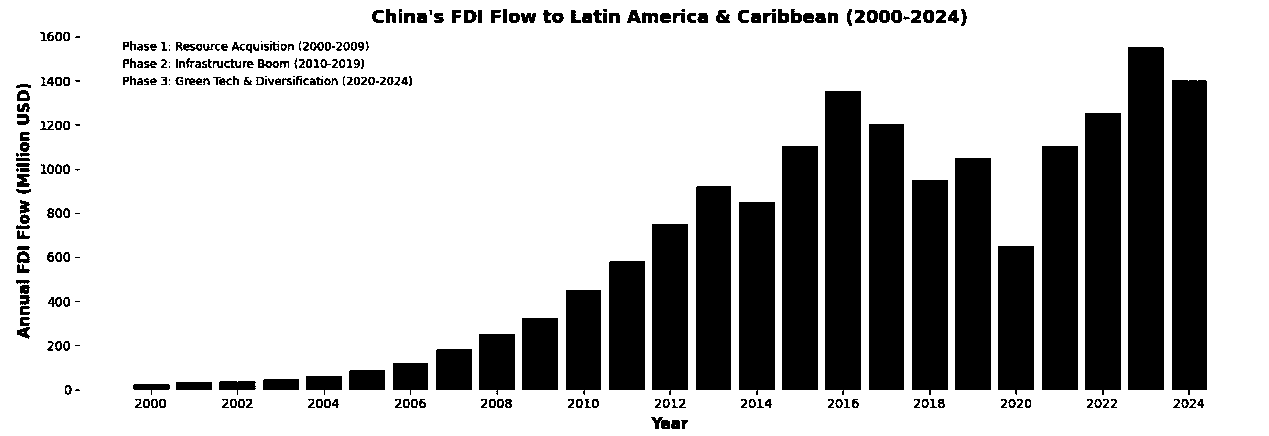
The United States in the imperialist system has been practically, since the end of the Second World War, the country that occupies the dominant position [2], and its policies of aggression and war, which have increased in recent months, we do not dismiss them, we take them into account, we denounce them and we oppose them [3], but it would be an absolute mistake to whitewash its main rival which is the Chinese economy and consider that the bloc of capitalist countries that it heads can be an ally of the workers and the peoples. The dominant position of the United States has been questioned in the last quarter century by the rise of China, and according to different analyses, continuing a peaceful development of the world situation, it would be on the eve of displacing it from that position.
From one error arises another: anti-imperialism as anti-Americanism leads to the strategic line of alliances with capitalist states, bourgeois forces, social democrats, support for projects and alliances of capitalist states different from or antagonistic to the US imperialist center. Thus, in the last 15 years, multipolarity has been promoted as an alternative choice to unipolarity, that is, the domination of the US in the imperialist system, although multipolarity would not be a break with imperialism, but its continuity by establishing another capitalist state in the dominant position. Years ago, we expressed it: it is not a clash between two worlds, the outdated world of capitalism versus the new world of socialism, but the inter-imperialist clash of two blocs of capitalist countries. The project of multipolarity itself is an alliance, the BRICS, of emerging capitalist countries, and analyzing each of its members we find that they are capitalist states, all of them among the main economies of imperialism, part of the G-20 and other capitalist inter-state alliances.
Multipolarity with its correcting positions of an outdated capitalism (alternative banks, new financial systems, end of the dollar and replacement by a new currency, new economic, political, military alliances, etc.) is considered an anti-imperialist tendency by considerable parts of the international communist movement that have even trampled on the principle of proletarian internationalism by supporting the imperialist war between Russia and Ukraine. But we insist, each of its components is a capitalist economy where the exploitation of wage labor rules, the private appropriation of socially produced wealth, flourishing monopolies, the export of capital, and the interests of accumulation, the tendency to war.
The opportunist currents argue something else, that is, in addition to being an anti-imperialist front, the participation of Russia and China is a guarantee in favor of peoples. The crude set-up of the ruling class in Russia to appropriate the heritage of socialist construction and its victories only surprises children who watch Red Square stagings of Red Army parades, designed by those who contributed to the temporary overthrow of the USSR and socialism in 1991, where Putin and others openly collaborated with Yeltsin, yet that is not what we want to refer to, but rather the place of Russia, whether it expresses a position in favor of the workers and peoples or strictly represents the interests of its monopolies. It seems to us that there is no one who denies its capitalist character [4], but it comes back to the point that there are capitalist countries that would not be in the highest and last phase, that would not be part of the imperialist system and that would be "anti-imperialist". By raising the possibility of capitalist countries being allies, of some bourgeoisies being allies against others, capitalism is absolved in general, although in particular it faces some ways of managing it; in the case of communists, such a policy is not only a serious mistake, but the abjuration of cardinal principles that are not negotiable, a tragedy, like what is happening in the current inter-imperialist conflicts, with the alignment of communist parties supporting one side of imperialism, that of multipolarity, attacking strikes and proletarian struggles, and demanding their cancellation, for example, in Kazakhstan, so as not to harm the "multipolar anti-imperialist initiative of the Belt and Road"; a decadence that only has resemblance to the decomposition of the Second International.