Italian capitalism: Reality and ambitions


Communist Front, Italy

Whether it is the eighth-largest economic power by nominal GDP, or the tenth by GDP at PPP, as mentioned above, Italy nonetheless occupies a high position in the hierarchy of global capitalism and in the imperialist pyramid, ranking among the world’s major economies. The current account balance in 2025 amounted to €27.4 billion (1.2% of GDP), up from €23.8 billion in 2024 [1]. "The improvement is due exclusively to the balance of primary income (3.4 billion, from -7.6), compared to the limited deterioration in the goods surplus (51.7 billion, from 55.0), in the secondary income deficit (-21.6 billion, from -18.7) and in the services deficit (-6.0 billion, from -4.9)... In 2025, the financial account recorded net acquisitions of foreign assets amounting to €26.9 billion (versus €51.8 billion in 2024). The negative balances in portfolio investment (-€22.6 billion) and derivatives (-€3.0 billion) were more than offset by the positive balances in direct investment (€11.0 billion), official reserves (€1.7 billion), and, above all, "other investments" (€39.7 billion)" [2]. The Net International Investment Position (NIIP) in 2025 amounted to €298 billion (13.3% of GDP) [3], marking Italy’s transition from a net debtor position in the decade 2000–2010 to a net creditor position starting from 2020. This level remains below that of Germany and the Netherlands but is significantly above France and Spain, which instead have negative NIIPs. The stock of Italian Foreign Direct Investment (FDI), which totaled $588 billion in 2020, has grown steadily over the years, reaching $608.501 billion in 2024 (approximately 26% of GDP) [4]. In summary, the composition of Italy’s Net International Investment Position is positive and is characterized by a creditor position in FDI and “other investments” (loans, bank deposits, and international trade credits—that is, forms of cross-border financing that involve neither corporate control as FDI, nor the purchase of tradable securities as portfolio investment). Italy remains a debtor in portfolio investment, due to the large foreign holdings of Italian public debt securities.

By geographic macro-areas, Italy’s outward FDI is concentrated mainly in the Euro-Atlantic economies: Europe (primarily the EU) for 55–60%, North America (the United States and Canada) for 20–25%, Latin America and the Caribbean for 8–10%, Asia and the Pacific for 6–8%, and only 2–3% goes to Africa and the Middle East. [5]

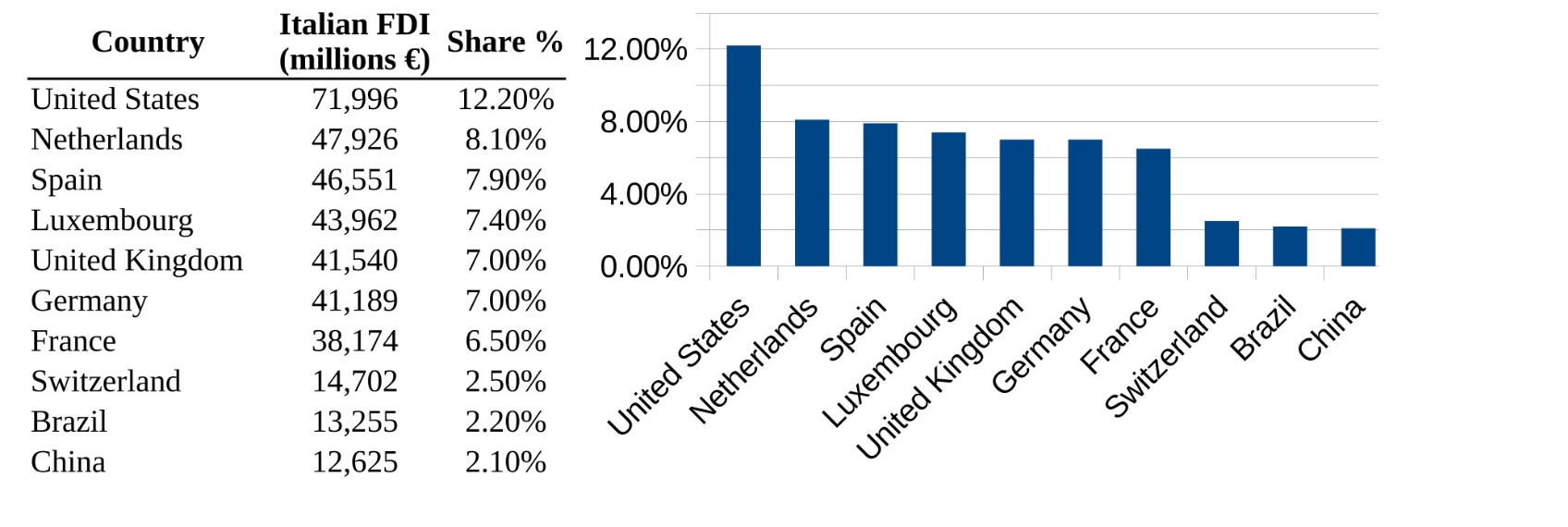
Tab. 1 and Chart 1 - Italy's FDI stocks, geographical distribution, top 10 countries, 2024 [6]

FC,I 01

The United States is the leading destination for Italian FDI, with approximately €72 billion, or 12% of the total. China (€12.6 billion, or 2.14%) and Russia (€11 billion, or 1.9%) follow at a far distance. [7]

Roughly similar is the geographic distribution of Italian portfolio investments abroad, with the United States again as the top destination country, accounting for 20.7% of the total. Some 44.1% is invested in the main EU countries (in order: France, Germany, Spain, the Netherlands, Luxembourg, etc.). The United Kingdom accounts for 8.3% of the total. [8]

Inward FDI (direct investments made by foreign entities in Italy) amounted to nearly €477 billion in 2024. The leading investors are the Netherlands with 38.8% and Luxembourg with 19.8% of the total. They are followed by Western and Central EU partners, while the United States ranks 8th with only 3.1% of the total. FDI stocks in Italy from Russia (0.2%) and China (0.1%) [9] are much smaller. The strong weight of the Netherlands and Luxembourg is due to their role as financial hubs, hosting numerous multinational investment funds.

Finally, regarding foreign portfolio investments in Italy, the main investor in Italian securities remains the United States with 16% of the total, followed by the United Kingdom (14%), Luxembourg (12%), France (10%), and Germany (8%). Among the Top 10, which hold about 85% of foreign portfolio investments in Italy, the only non-EU investors besides the United States are Switzerland (5%) and Japan (4%), while China and Russia hold 1% and less than 0.3%, respectively. [10]

Italian multinational companies own more than 24,800 foreign affiliates in about 172 countries, employing around 1.7 million workers abroad. Romania ranks first in industrial activities, with more than 90,000 employees in Italian affiliates, followed by China with more than 69,000. In the services sector, Brazil ranks first with more than 81,000 employees, followed by the United States (over 72,000) and Germany (over 64,000). [11]

Several important conclusions can be drawn from the data:

  1. The Italian economy is deeply embedded in the Euro-Atlantic imperialist bloc, understood here not in a geographic but in a political sense, encompassing both the G7 and the EU. Italy holds a significant position in terms of economic size (GDP levels), merchandise exports (the world’s 7th-largest exporter), capital exports, and external accounts, albeit within a broader context of the general decline of the Euro-Atlantic bloc in the face of the rise of new emerging powers.
  2. The Euro-Atlantic bloc is the main destination for Italian exports, both of goods and capital, while trade and financial exchanges with the new emerging capitalist powers—particularly China and India—remain relatively limited.
  3. Based on the numerical data, Italy does not appear to be of major interest to the emerging capitalist powers either in terms of FDI or portfolio investments; likewise, the penetration of Italian capital into those countries likely is hindered by legislative, cultural, and linguistic barriers, in addition to structural limits of the Italian economy itself, as will be discussed later.
  4. A tendency toward relocation to countries offering comparative advantages can nevertheless be observed. These advantages are no longer attributable to lower wages—since Italy ranks near the bottom in wage levels among OECD countries—but rather to more favorable tax regimes, cheaper credit, greater efficiency of the banking and judicial systems, better infrastructure, and similar factors.
  5. As noted above, the Italian economy ranks second to last among G7 countries in terms of GDP at purchasing power parity and is affected by the negative dynamics of its bloc's growth. Within the context of a generalized capitalist crisis, these dynamics appear more evident in the declining economies of the Euro-Atlantic imperialist bloc than in those of the BRICS bloc.
  6. The significance of Italian and European commercial and financial interests in the U.S. market, as well as the unequal economic interdependence between the two sides of the Atlantic, are at the root of the alignment of the Italian and European governments, as well as the EU, with U.S. foreign policy, and their military ventures, albeit in a context of contradictions among them.
  7. The levels of Italy's GDP and exports of goods, services and capital, despite the recessionary trends common to all G7 and EU economies, contradict the right- and left-wing sovereigntist positions that explain this alignment as colonial subordination, rather than as a voluntary political-military alignment to protect the interests of Italian capitalists in the U.S. market, thus revealing all the cosmopolitanism of the bourgeoisie.

Italy, even in fierce competition with other EU countries such as France, is seeking to expand its sphere of influence in the Mediterranean, the Middle East, North Africa, the Sahel, and the Horn of Africa—the so-called "Greater Mediterranean" as the “natural” projection of Italian imperialism. This concept closely recalls the notion of “mare nostrum” of the fascist period and, with aspirations befitting a global power, is today extended as far as the Indian Ocean and even to parts of the Pacific, from which the trade routes strategically important for Italy originate.

The so-called Mattei Plan, enacted by the current government, envisions strengthening "cooperation" ties with countries of strategic priority, such as Algeria, Libya, Tunisia, Egypt, Mozambique, Ethiopia, and other African states, primarily in the energy sector, but also encompassing infrastructure, logistics, transportation, agribusiness, and technology. This is a classic framework that conceals under the term "cooperation" a predatory intent over natural resources—particularly energy—and the export of capital to acquire new profits for Italian monopolies, either through direct control of productive units or through interest-bearing loans to local businesses, banks, and governments.

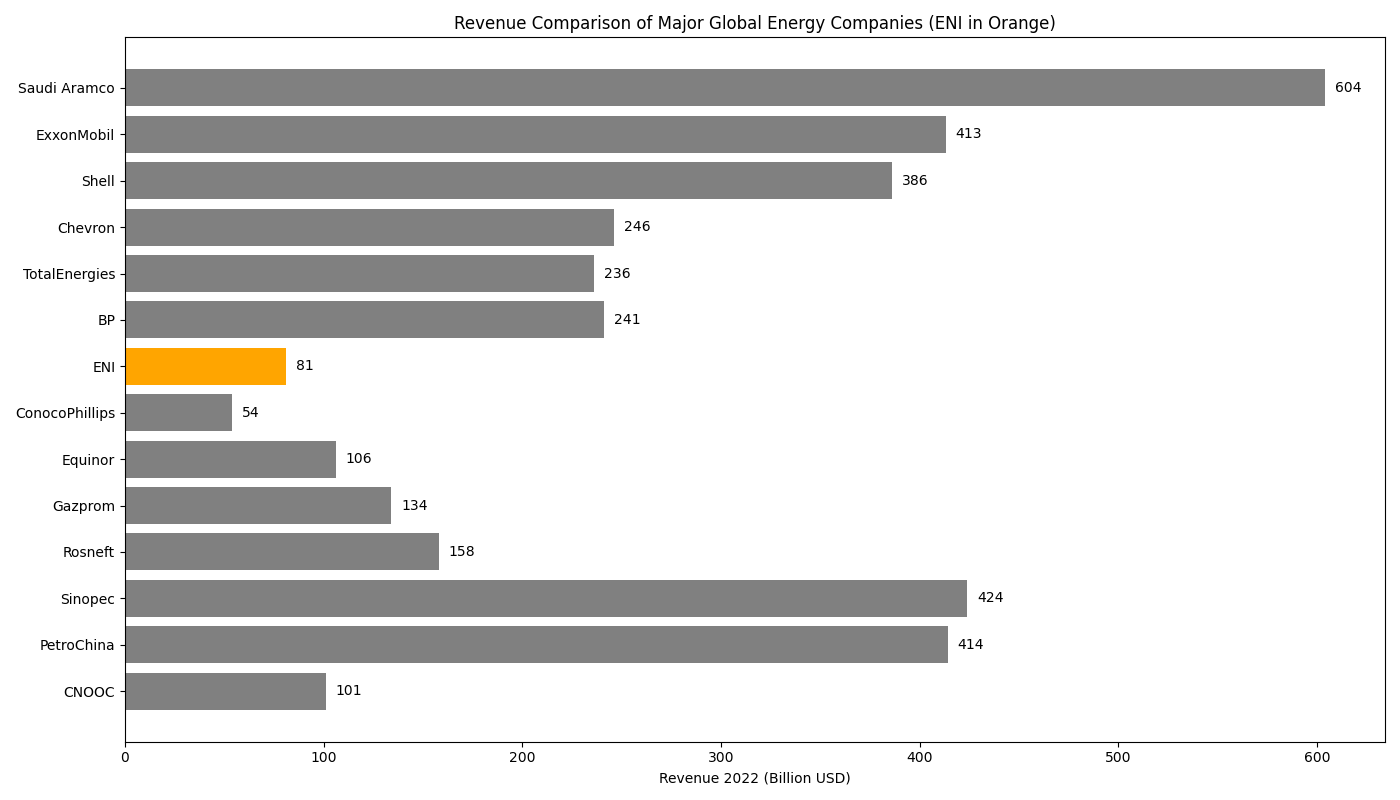
One of the main actors in this imperialist design is ENI, a joint-stock company 32.3% controlled by the Italian state, engaged in the extraction of oil and gas, offshore fields, construction of energy infrastructure, and, to a lesser extent, renewable energy. ENI is widely considered the real "Ministry of Foreign Affairs of Italy". In Africa, ENI operates in Libya, Algeria, and Egypt, as well as Angola, Mozambique, and Nigeria. In the Middle East, it has a strong presence in Iraq, the Exclusive Economic Zone (EEZ) off the Gaza Strip, the Caspian Sea (after having reduced its presence in Russia for political reasons), and Cyprus. In Latin America, it operates in Brazil, and in the Indo-Pacific region, it is present in Vietnam and Indonesia. ENI’s presence in Libya, while still significant, was reduced following the 2011 Libyan war and the assassination of Qaddafi, to the advantage of its French competitor Total. In Cyprus, ENI finds itself in a schizophrenic situation, cooperating with Turkey on gas transportation via the Blue Stream pipeline, yet simultaneously in conflict with Turkey over offshore drilling, where Turkey has employed naval forces to block ENI’s operations. It is no coincidence that Italy chose to send military units to Cyprus immediately after the beginning of the Iran war. Among the various dirty operations involving ENI, we can cite the illegitimate agreement signed with Israel to exploit gas fields in Palestinian territorial waters off the Gaza Strip. The interests of Italian monopolies shape the foreign policy of the Italian state and made it one of the major accomplices in the genocide in Gaza. The ecological disaster, caused by ENI in Nigeria’s Niger Delta due to oil spills stemming from outdated infrastructure, gas flaring, and improper disposal of production water often containing heavy metals and chemicals, has resulted in soil acidification and contamination of aquifers—a severe environmental and food crisis for local populations. Fig. 2 presents a comparative chart of ENI's position in the hydrocarbon sector.

fig. 2 - Revenue of the Major Global Energy Companies

FC,I 02

Although ENI’s revenue is far lower than that of the Saudi, Chinese, American, and Russian giants, it still ranks among the top 12 oil and gas companies in the world.

ENI does not exhaust the panorama of Italian monopolies operating globally. In the automotive and commercial vehicle sector, we find Stellantis Automotive, one of the world’s top five automotive groups, formed from the merger of Fiat Chrysler and PSA Group, with brands such as Fiat, Jeep, Peugeot, Citroën, and Opel. In the eyewear and lenses sector, Essilor Luxottica ranks among the global giants, controlling brands like Ray-Ban, Oakley, Persol, and distribution for Prada, Chanel, etc. In the aerospace, defense, and military electronics sector, Leonardo is one of the top European players in defense, present in over 150 countries with helicopters, avionics systems, radar, and ground defense systems. In the cables and energy/telecommunications systems sector, Prysmian Group stands out as a world leader. In the high-end tire sector, the Pirelli brand is strong in Europe, Asia, and Latin America. In the civil and military shipbuilding sector, Fincantieri excels, being a global leader in the cruise segment and an important international player in naval defense, with over 20 shipyards in Italy and abroad (United States, Norway, Romania, Vietnam).

In the banking sector, Intesa Sanpaolo and UniCredit, both with assets around €1,000 billion as commercial banks, and Mediobanca as an investment bank are three entities capable of operating internationally and competing with American and Asian giants such as JP Morgan, Goldman Sachs, HSBC, and others, despite differences in size.

Italian imperialism therefore operates at several levels to ensure competitive advantages over competitors, even if they belong to alliances of which it itself is a part:

Through governmental instruments such as the Mattei Plan, collaterals, loans, and financing to partner countries’ governments.
Through direct investments by monopolies.
Through commercial loans by banks operating internationally.
Of course, whether governmental or commercial, such loans typically require the borrower to pay interest—political-strategic or monetary—and to use the funds to purchase products from the lending country, thereby allowing it to profit both from interest on the loan and from the sale of its own products.

An average of 8,000 Italian military personnel are deployed each year in 40 military missions abroad, across more than 20 countries worldwide. Among these, a significant portion consists of NATO and EU missions in which Italy plays a non-secondary role. These are complemented by bilateral missions with the governments of African countries, such as those in Niger, Libya, Somalia, and Djibouti, as well as the Italian bilateral mission in Lebanon. It is noteworthy that the Italian military presence coincides not only with regions that are strategically significant for the stability of international capitalism—such as Somali waters or the Middle East more generally—but also with areas where the predatory ambitions of Italian monopolies are concentrated, such as the Eastern Mediterranean and sub-Saharan Africa, where the intent to supplant the influence of other imperialist powers, such as France, has been openly declared by Italian governments. Italian foreign policy is anchored in its traditional alliances with the United States and the European Union, but at the same time it seeks to “play on all fronts” in its relations with emerging capitalist powers and their markets, reflecting the contradictions existing within the Italian bourgeoisie itself. A clear example was Italy’s decision to join China’s “Belt and Road Initiative” in 2019, which it later withdrew from in 2023 under pressure from the United States. Likewise, Italy’s alignment with the United States and the European Union on sanctions against Russia serves the interests of the dominant sectors of Italian capital that have substantial stakes in the U.S. market at the expense of the proletariat, with the resulting rise in the cost of living, but also at the expense of other sectors of capital that have been hit by higher energy and raw material costs or by the ban on exports to Russia.

This gives the image of a relatively strong capitalism, capable of competing as an imperialist actor at the global level—not that of a colony of anyone. Considering Italy a colony, in addition to being an outdated concept, since the global colonial system definitively disappeared in the 1970s, with the sole exception of Palestine, effectively ends up supporting the national capitalist bourgeoisie in its competition with foreign capital, dragging the proletariat into sovereigntist and social-chauvinist positions under the banner of its exploiters.

However, there are specific structural features of Italian capitalism that have a strong internal social impact. Italy is characterized by an extremely high public debt relative to the size of its economy, second only to that of Greece. At the end of 2025 it amounted to approximately €3.095 trillion, with an increase of €128 billion compared to the previous year. Compared with 2015, public debt has increased by €930 billion (+43% nominally, with an average annual growth of 3.6%) [12]. The debt-to-GDP ratio, which was 135.3% in 2024, reached 137.9% in the first quarter of 2025, confirming the structural upward trend, also as a result of GDP stagnation [13]. Through public debt, the costs of capital reproduction are socialized via interest payments and principal repayments, borne by general taxation on securities held by private individuals, banks, and investment funds, thereby implementing a regressive redistribution of wealth produced by labor toward capital—a process also reinforced by cuts to social public spending. Capital therefore directly derives a guaranteed parasitic yield from public debt.

Net of GDP stagnation, the debt-to-GDP ratio grows because it is primarily due to the role of the state in supporting private accumulation through bank bailouts, incentives to businesses, military spending, and other forms of public expenditure diverted from meeting the needs of the working masses. In essence, the bourgeois state acts as a “guarantor of last resort” for capital, absorbing its losses and stabilizing its accumulation in times of crisis. Public debt is used as a pretext to justify austerity policies and the containment of social public spending (except for military spending or support for capital), privatizations aimed at raising immediate revenue, and—above all—the compression of wages and the intensification of exploitation in order to increase capitalist profits and rents.

The Organisation for Economic Co-operation and Development (OECD) confirms the transfer of wealth from wage labor to capital by providing worrying data on wage dynamics. In the five years between 2021 and 2025, real wages in Italy declined by 7.5%, confirming that Italy is the country with the largest drop in real wages among the major advanced economies [14]. OECD data show that real wages in Italy today are roughly at the same level as in the early 1990s, implying nearly three decades of wage stagnation [15]. The rapacity of Italian capitalism is also confirmed by: 1) data on the shares of GDP allocated to labor (wages and salaries) and to capital (profit), which show a decrease of about 3% in labor compensation as a share of GDP, alongside a similar increase in profits and rents in the period from 2019 to 2023 [16]; 2) data on the distribution of gross value added between labor and capital over the same period, which show a decline in labor’s share of compensation equal to 2.5% in five years, mirrored by a corresponding increase in capital’s profit share. [17]

Due to low wages, the “working poor” [18] make up 10.2% of the employed labor force; this share rises to 14.6% among manual workers and also affects 2.8% of managers and professionals undergoing a process of proletarianization. In Italy, the proportion of workers at risk of poverty has remained steadily around 10–12% over the past fifteen years, one of the highest levels among the major economies of Western Europe. [19] Eurostat tells us that in Italy about 23.1% of the population—over 13 million people—are “at risk of poverty or social exclusion” according to the AROPE indicator, which considers three aspects: monetary poverty, severe material deprivation, and low work intensity within the household.[20] The Gini coefficient, which measures income inequality net of taxes and contributions, stands at 32.2 on a scale from 0 to 100, indicating a level of inequality higher than the Eurozone average (29.9) and showing an upward trend. [21] As for the concentration of wealth, wealth inequality in Italy is very high: the richest 5% hold 46% of the country’s net wealth, while the bottom 50% of the population possess less than 8%. [22]

Low wages and poverty are not an unavoidable fate, but the result of specific policies in place since the late 1980s, allowed by shifts in the balance of power both internationally (between the capitalist world and the Soviet Union) and nationally (between the bourgeoisie and the proletariat, partly due to the reformist and revisionist deviation of the Italian Communist Party (PCI) and the unions connected). These changes accelerated existing trends and amplified the contradictions of the capitalist mode of production. By the late 1990s, the adoption of the euro deprived Italian capitalism of the ability to use currency devaluation to regain international competitiveness. To the “natural” tendency of capitalism to push wages below subsistence level, a deliberate policy was added—supported by theories that help increase exploitation, EU directives and recommendations, European jurisprudence, and more—aimed at regaining competitiveness through increases in productivity (intensifying exploitation), extension of the working day, working life, and surplus labor (increasing both absolute and relative extraction of surplus value), cuts to social public spending to free resources in support for accumulation, and blocking wages and salaries. This approach has severely worsened the life conditions of the working class and popular strata, but it has also had an overall negative effect on the national economy by depressing consumption, thereby reducing demand and discouraging investment and growth in supply.

Private savings are widespread in Italy and most likely reflect uncertainty about the future and distrust toward the bourgeois state. In 2023, private savings amounted to €215 billion (10.5% of GDP), of which 35% of the total wealth stock of households in financial assets represent (60% in bank deposits, 30% in securities and 10% in supplementary pension funds, with a rising trend due to the gradual decline in returns from public pensions), and 65% in real estate assets. [23] Private savings increased during the pandemic, both because of widespread fear of the crisis and the objective closure of activities and reduction in consumption. They then fell by 3 percentage points between 2021 and 2023 due to inflation and the increase in the discount rate by the European Central Bank. At the same time, inequality in savings also increased in favor of higher-income groups, which have a lower consumption-to-income ratio and a higher savings-to-income ratio. In recent years the wealthiest groups have saved more, increasing their share of total household wealth. These data might suggest the (incorrect) idea of widespread prosperity. Actually, the high level of private savings is not a solution to the problem of negative wage dynamics in the face of generalized increases in prices and tariffs, since most of these assets are tied up and cannot be used to “make it to the end of the month,” as demonstrated by the recorded decline in consumption (–2.1% in 2023). [24] Moreover, in the face of a growing housing problem—caused by high purchase prices and rental costs relative to low wages—it should be noted that a process is underway of centralization of real estate ownership in the hands of a few large private groups (around 12% of the market) and the Catholic Church, which holds about 10% of the national real estate stock—around 700,000 properties with an estimated value of €80 billion, including agricultural land, residential properties, and commercial buildings. Most of these properties benefit from tax exemptions and are not registered as traditional private property, given the Church’s status as a non-profit entity. [25]

The tax burden in Italy is nearly 43%, roughly 10 percentage points higher than the OECD average (33.9%), ranking third after France and Denmark [26]. The fiscal dimension, which bourgeois governments moralistically discuss only in terms of revenue, evasion, and avoidance, must also be examined in relation to how tax receipts are used—that is, in relation to the composition of public spending. In Italy, around 46% of public expenditure is allocated to pensions, roughly 25% to healthcare and education, 7% to interest on public debt, and 4% to defense—a figure expected to rise given the recent commitments made by the Meloni-led government to NATO and the EU. [27] Aside from pension spending, private capital benefits from a substantial portion of the remaining 54% through various forms of public support for accumulation, not to mention the morally questionable use of public funds to support the fascist Ukrainian administration and continue the war. The inequity of the current tax system should also be highlighted: it favors middle- and high-income earners while penalizing lower incomes through the flat tax of 15% (with additional deductions and a 35% reduction in social security contributions) for individuals earning up to €85,000 per year (such as self-employed professionals, who also have greater opportunities to evade taxes). Meanwhile, dependent employees earning up to €15,000 are taxed at 23%, in stark contradiction to the progressive taxation principles established in the Constitution.

Turning to tax evasion, the most recent comprehensive data are from 2021. The so-called tax gap (difference between theoretical and actual revenue) was estimated at over €82 billion in 2021 [28]. Of the €72.3 billion of evasion officially identified by the Italian Revenue Agency in 2024, only €12.8 billion (17.7% of what was owed) [29] was actually collected—highlighting the ability of large capital to escape taxation. According to the European Commission, VAT evasion in Italy amounts to around €25 billion, or 15% of potential revenue, well above the EU average of 9.5%, ranking fifth after Romania, Malta, Poland, and Lithuania. [30] VAT owed but not collected due to non-compliance, insolvency, or errors in 2023 amounted to €128 billion (+1.6% compared to 2022), while foregone VAT revenue due to political choices (reliefs, exemptions, reductions) amounted to €742 billion, [31] to the benefit of European capitalists. Corporate income tax (CIT) evasion in Italy is estimated at 19.9%, above the EU average of 10.9%, ranking fourth after Romania, Slovakia, and Poland. [32] The large gap between theoretically owed and actually paid taxes is not only due to illegal evasion but also to reliefs, exemptions, deductions, avoidance, aggressive tax planning, and the scarce collection capacity of the tax administration, which is itself not immune to corruption. It is no coincidence that Romania—home to the highest VAT and corporate tax gaps in the EU—is also the primary destination for the relocation of Italian companies. Regarding fraud in European funds, Italy is among the countries with the most investigations by OLAF (European Anti-Fraud Office). By the end of 2025, Italy reportedly had a very high number of active investigations (around 991) related to fraud in European funds or public subsidies, with a potential estimated damage of around €28.7 billion. Roughly two-thirds of these cases are linked to the Recovery and Resilience Facility (RRF), [33] highlighting a systemic risk associated with major EU programs mobilizing significant resources. Money laundering in Italy is estimated at €25–35 billion (about 2% of national GDP), [34] while the business of organized crime is estimated at around €40 billion, involving 150,000 related companies. [35] A joint study by SVIMEZ and the Financial Police shows that between 2010 and 2024, €61.4 billion from criminal activities was laundered, 80% of which was reinvested in Northern and Central Italy. [36]

Marx had already written on the criminal nature of capitalism, able to commit any atrocity for profit. Antonio Gramsci revisits the topic with particular reference to Italy and the “cult” of illegality that animates its bourgeoisie and helps consolidate its dominance. “The Italian bourgeoisie has developed … a series of extra-legal practices, acts of violence, and criminal means, which constitute an integral part of its history and its capacity for domination.” [37] And again: “Italian heavy industry and finance have historically formed a ruling class that does not limit itself to respecting the law but uses every means—clientelism, fraud, political pressure—to maintain and expand its economic and political position. The Italian state, in turn, serves as an instrument of this domination, providing legal protection and fiscal advantages, while the popular masses remain excluded from the benefits.” [38] These observations are confirmed by data highlighting a particular feature of Italian capitalism: the belonging of the capitalist bourgeoisie, their political representatives, and organized crime—whether mafia-linked or otherwise—to a unified ruling class, of which they are inseparable components.

Italian capital is concentrated in the following strategic sectors: manufacturing (automotive, textiles, footwear, chemicals), banking and insurance, energy, high technology (civilian and military), shipbuilding, construction and road infrastructure, agri-food, telecommunications, tourism, culture, and fashion (design, luxury goods). Regarding capital centralization, 99% of Italian companies are micro, small, and medium enterprises (up to 250 employees), while large firms make up only 1% of the country’s productive system. The following Table 3 shows the breakdown of Italian companies by number of employees, their share of total companies, and their share of total jobs.

Fig. 3 – Breakdown of Italian Companies by Size and Number of Employees [39]

Employees

Companies

Jobs

0 – 9

70,00%

12,00%

10 – 49

20,00%

20,00%

50 – 249

9,00%

25,00%

over 250

1,00%

43,00%


The level of capital centralization in Italy is seemingly lower than in the major EU and G7 countries. However, a significant portion of small and medium-sized firms is permanently integrated into the supply chains of large monopolies, functioning as subcontractors with no direct access to markets.

The degree of capital centralization is better expressed by the Concentration Ratio, which measures a company’s market share. The CR shows that in strategic sectors, the top 3–10 large groups hold a dominant market share. For example, in the automotive sector, the CR4 (the top four companies) exceeds 80% of the market, while in the energy sector, the CR3 (the top three companies) covers 90% of the market. Thus, the CR provides a picture of strong and increasing centralization of capital in strategic sectors dominated by a few large groups. On the other hand, the fragmentation of the productive system into very small companies discourages technological innovation in products and processes for reasons of scale, prevents access to foreign markets due to the inability to fulfill large orders, and pushes firms to seek competitiveness only by reducing labor costs—particularly wages—often taking advantage of the absence of union organization and the inapplicability of the Workers’ Statute and the National Collective Bargaining Contract. This fact also makes it more difficult to organize workers and coordinate labor struggles.

A weakness of Italian capitalism is its dependence on imports of natural gas and oil for over 90% of its basic needs. The Department of Commerce of the United States, the country that has benefited most from the sanctions on Russian gas and oil states that the overall energy mix in Italy is composed primarily of natural gas and oil, accounting for a total of 76%, about 22% from renewable energy sources, and the remaining 2% from coal and other solid fuels. "To meet its overall energy needs Italy resorts to natural gas (35%), oil and petroleum products (38%), renewables (20%), coal and other solid fuels (3.4%), imported electricity (3%), and non-renewable waste (approx.1%)... the goal is to generate electricity solely by renewable sources (80%) and nuclear power (11-20%) by 2050... In 2024, LNG made up 25% of natural gas imports into Italy (vs. 23% in 2023 and 11% in 2022), amounting to approximately 14.6 billion cubic meters (bcm).  LNG imported in Italy in 2024 originated from Qatar (45.21% - approx. 6.6 bcm), the United States (34.93% - approx. 5.2 bcm), Algeria (13.70% - approx. 2 bcm), Russia (1.37% - approx. 0.2 bcm), other countries (4.79% - approx. 0.7 bcm). During the first half of 2025, LNG accounted for 30% of Italy’s natural gas imports... U.S. LNG imports constitute an ever-increasing portion of total LNG imports into Italy (approximately 35% in 2024, 33% in 2023, 21% in 2022 and 9.6% in 2021). The United States became Italy’s top liquid natural gas (LNG) supplier in 2025, accounting for 45 percent of deliveries through July 2025." [40] Taking into account that until 2022 Italy imported about 30 billion cubic meters of gas from Russia, equal to 41% of its energy needs, and that, comparatively, U.S. LNG delivered to Europe can be up to roughly 30–50% more expensive than Russian pipeline gas on an energy-equivalent basis, mainly due to additional liquefaction and transportation costs (excluding regasification) [41], we see both the sheer foolishness of the European and Italian leaderships and the economic sacrifice they cynically imposed on workers by replacing a cheap energy dependency with another that is politically unpredictable and high-cost—further worsened by excises and VAT. A practical example: if the gas price at origin is set at 100, one must add 35% for transportation and distributor margin, 25% for excises and various charges, plus VAT at 10% for private consumption or 22% for industrial use on the resulting subtotal, reaching a final cost of 186 or 286, depending on the type of user, where the cost of the raw material accounts for only 54% or 35% of the total. This mechanism directly affects workers, through higher utilities bills, and indirectly, through increased prices due to higher production costs. Naturally, pre-election promises to modify the combined effect of excises and taxes were not kept, in order to finance rearmament and aid to the Ukrainian fascist regime, among other things.

We have briefly examined the strengths and weaknesses of Italian capitalism against the backdrop of ongoing inter-imperialist competition and seen how, whether strong or weak, capitalism is always synonymous with exploitation, progressive impoverishment, and oppression. Relations of production based on these premises—on antagonism between and within classes rather than on solidarity among producers—cannot endure, given the unlimited appetite of capital and the limited available resources. As communists, we must intensify our efforts to bring the working class back to the awareness of its historical role as the revolutionary subject. In pursuing these aims, we must not replace concreteness with empty rhetoric. We must constantly keep in our mind and actions the revolutionary strategic goal of overthrowing capitalism and building socialism. We must proceed toward this goal, toward the unification of the working class and popular forces by struggling every day for the immediate problems that proletarians feel directly—wages, work, housing, and so on—in order to restore their class consciousness by intensifying the ideological and political struggle through carefully crafted, clear slogans, without falling into reformist minimalism, but linking them to the broader revolutionary prospect. We hope that this analysis can help in studying how old and new contradictions operate in relation to the working class and its potential allies, and in identifying an effective strategy capable of taking advantage of them in order to move forward to the proletarian revolution in our country as a particular component of the broader world revolution—for the overthrow of bourgeois power and capitalism, for the establishment of the dictatorship of the proletariat, and for the construction of socialism-communism.


[1] Bank of Italy, https://www.formatresearch.com/en/2026/02/19/Balance-of-payments-and-international-investment-position-November-2025-Bank-of-Italy/

[2] Same source

[3] Same source

[4] UNCTAD – World Investment Report 2025, 11/29/2025

[5] Italian Trade Agency, ICE Report – Italy in the International Economy 2024-2025

[6] Bank of Italy (2025), Statistics on direct investments – amounts by counterpart country, data updated to 2024, authors' elaboration.

[7] Same source

[8] Bank of Italy, Economic and Financial Issues, no. 439, table on “First ten destination countries of Italy’s portfolio investment abroad”

[9] Bank of Italy, Direct investment in Italy by partner country (stocks), Statistical Database, last update 2024.

[10] International Monetary Fund (IMF), Coordinated Portfolio Investment Survey (CPIS): Bilateral portfolio investment positions – holdings of securities issued by Italy, IMF Data Portal.

[11] https://www.sace.it/education/dettaglio/investire-all'estero--opportunità-e-sfide-per-le-imprese-italiane

[12] Bank of Italy, statistical report: Public Finance — Borrowing Requirement and Public Debt, 2025

[13] Eurostat (2025), Government debt at the end of the first quarter of 2025, Euro Indicators.

[14] OCSE (2025), OECD Employment Outlook 2025 – Country Note: Italy.

[15] OCSE, International dataset on real wages – OECD, Average Annual Wages (Real, PPP, constant prices)

[16] University of Groningen University of California, Davis (2025). Share of Labour Compensation in GDP at Current National Prices for Italy [LABSHPITA156NRUG] (Penn World Table 11.0). Retrieved from Federal Reserve Bank of St. Louis (FRED). Series constructed from national accounts data using OECD and UN datasets harmonized for international analysis.

[17] Eurostat (2024), National accounts – Compensation of employees as a share of gross value added (Italy), 2019-2023.

[18] Defined by Eurostat as “employed persons living in households with a disposable income below 60% of the national median income.” (EU-SILC).

[19] Eurostat, In-work at-risk-of-poverty rate (EU-SILC).

[20] Eurostat (2024), At-risk-of-poverty rate – EU-SILC, Italy 2023.

[21] Eurostat – Gini coefficient of equivalised disposable income (EU-SILC), Italy

[22] Bank of Italy (January 8, 2024), Distributional Accounts on the Wealth of Italian Households.

[23] Bank of Italy, Annual Report 2024: Analysis of Household Savings and the Composition of Wealth.

[24] ISTAT (2024), “The Dynamics of Private Consumption in Italy over the Last Five Years,” Annual Report 2024.

[25] ISPI Report: Catholic Church Real Estate in Italy

[26] OCSE (2025), OECD Revenue Statistics 2024 – Italy

[27] Italian Ministry of Economy and Finance (MEF), 2024 Budgetary and Planning Report.

[28] Bank of Italy (2025) — Data on estimated tax and social‑security contribution evasion for 2021.

[29] https://www.ansa.it/english/news/business/2025/08/25/only-17.7-of-uncovered-tax-evasion-collected-audit-court_8c01a1a9-e68c-4f24-8f6d-928d18eec1fe.html

[30] European Commission, Taxation and Customs Union — VAT Gap

[31] Same source

[32] KPMG’s EU Tax Centre (2025), CIT compliance gap across EU Member States

[33] https://www.ilfattoquotidiano.it/2026/03/02/frodi-alla-ue-anche-nel-2025-litalia-e-prima-ma-e-merito-anche-delle-indagini/8311016/

[34] https://uif.bancaditalia.it/pubblicazioni/quaderni/2025/quaderno-26-2025/index.html

[35] https://www.ansa.it/sito/notizie/economia/pmi/2024/12/14/cgia-le-mafie-hanno-volume-daffari-da-40-miliardi-anno_c263aca8-e077-49d1-8d0b-c1fa4d756f9d.html

[36] https://www.borsaitaliana.it/borsa/notizie/radiocor/economia/dettaglio/sud-svimez-da-mafie-61-miliardi-riciclati-in-15-anni-80-al-centronord-nRC_27112025_1038_222102345.html

[37] Antonio Gramsci, Prison Notebooks, Notebook 2, §13, “On the nature of Italian bourgeoisie”, Editori Riuniti

[38] Antonio Gramsci, Prison Notebooks, Notebook 12, “Bourgeoisie and State in Italy”, Editori Riuniti

[39] Bank of Italy (2024), "Report on Financial Stability"

[40] U.S. Department of Commerce, International Trade Administration, Italy Country Commercial Guide

[41] https://internationalenergytransition.info/how-cheap-is-russian-natural-gas-via-pipeline-compared-to-lng-imports